What's driving fraud in 2026? 5 insights from Alloy's State of Fraud Report
Jan 8, 2026
Principal fraud advisor Sara Seguin reveals what financial institutions and fintechs need to know now

2025 kept fraud professionals busy.
Alloy's fourth annual State of Fraud Report just dropped, and the data from more than 500 fraud and risk leaders reveals a maturing industry grappling with evolving threats. Some findings confirmed what I've been hearing from clients. Others genuinely surprised me.
Here's what caught my attention.
1. Fraud continues on a steady climb — and it's not slowing down
67% of respondents reported an increase in fraud attempts over the past year. While this reflects a stabilized growth pattern rather than a crisis spike, the trend is clear: fraud isn't going away anytime soon.
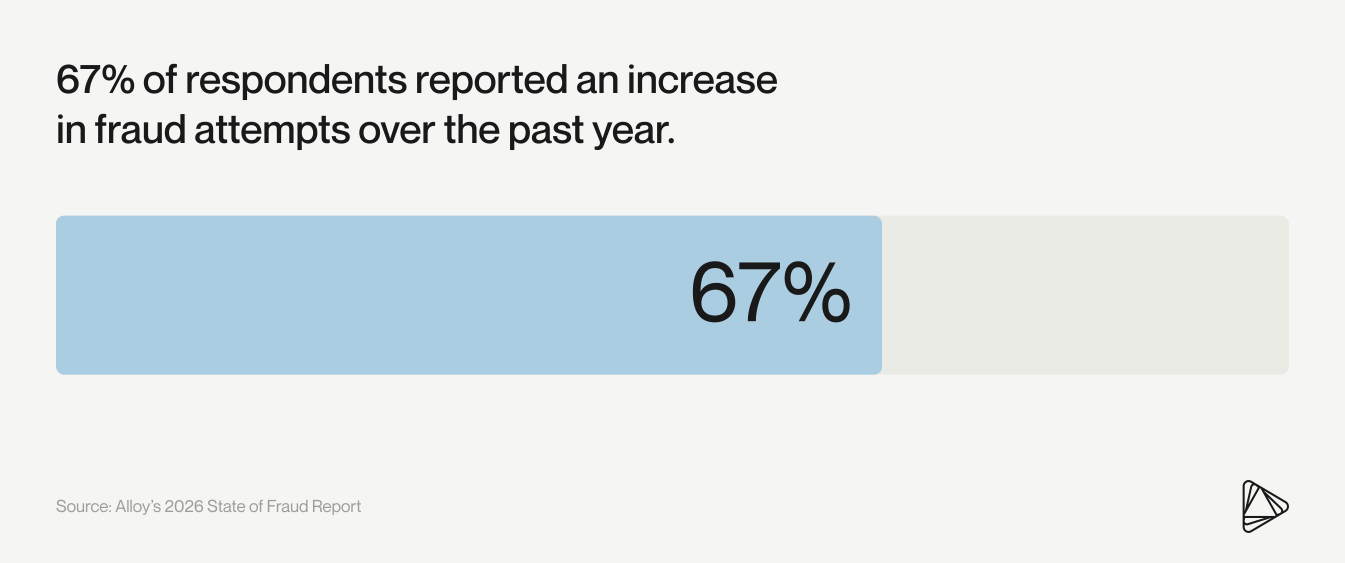
This number, which is up 7% from what we reported last year, shows that fraudsters are doubling down on generative technologies that make fraud easier to scale. With sophisticated scripts and AI-powered tools, bad actors can push out more attacks than ever before.
Today, some fraud rings are operating from organized compounds, often in other countries outside US jurisdiction. These groups treat fraud as a full-scale business operation, with financial organizations and their customers facing collateral damage.
As long as there's money to be made — and there always is — fraudsters will continue exploiting vulnerabilities. The focus now must be on building resilient, adaptive fraud prevention strategies that can keep pace with increasingly automated attacks.
2. First-party fraud demands deeper investigation
First-party fraud (when someone commits fraud in their own name) continues to challenge financial institutions and fintechs. However, many organizations struggle to accurately categorize what they're seeing. Some respondents report high confidence that they're dealing with true first-party fraud, even after deploying comprehensive detection tools. But the reality may be more complex.
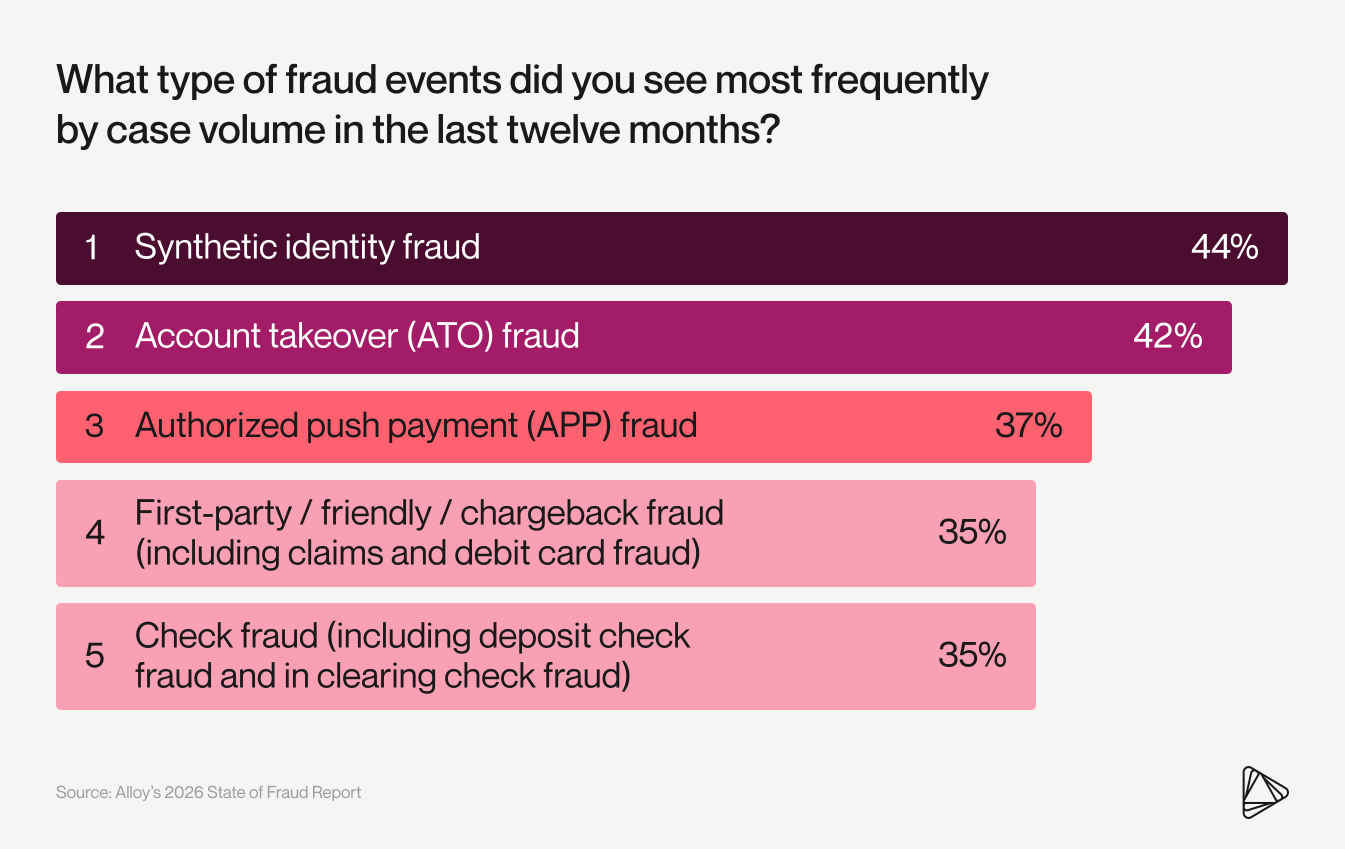
In some cases, what appears to be first-party fraud could actually involve synthetic identities or hybrid schemes that blur the lines between fraud typologies. This misclassification matters because it impacts how institutions respond and where they allocate resources.
There's also a strong correlation between economic conditions and first-party fraud. During economic downturns, desperation drives certain fraud behaviors, as we saw during the pandemic with claims abuse. With consumer confidence fluctuating, financial institutions should monitor for shifts in first-party fraud patterns.
3. Community banks, regional banks, and credit unions face higher fraud rates in physical channels (and the reason why is complicated)
Community banks, regional banks, and credit unions reported higher fraud rates at ATMs, contact centers, and branches compared to enterprise banks and fintechs.
This trend is interesting because it begs the following question. Have enterprise institutions really invested that much more in fraud prevention at branches and contact centers, or are smaller institutions just better at categorizing their fraud?
One possible explanation is that mid-market institutions may not have invested as heavily in fraud prevention technology for these channels compared to enterprise banks. Budget constraints could also be a contributing factor.
Fraud investments for community banks, regional banks, and credit unions may heavily lean toward digital channels. And for good reason: 71% of respondents said that fraud most commonly occurred in online or mobile banking channels.
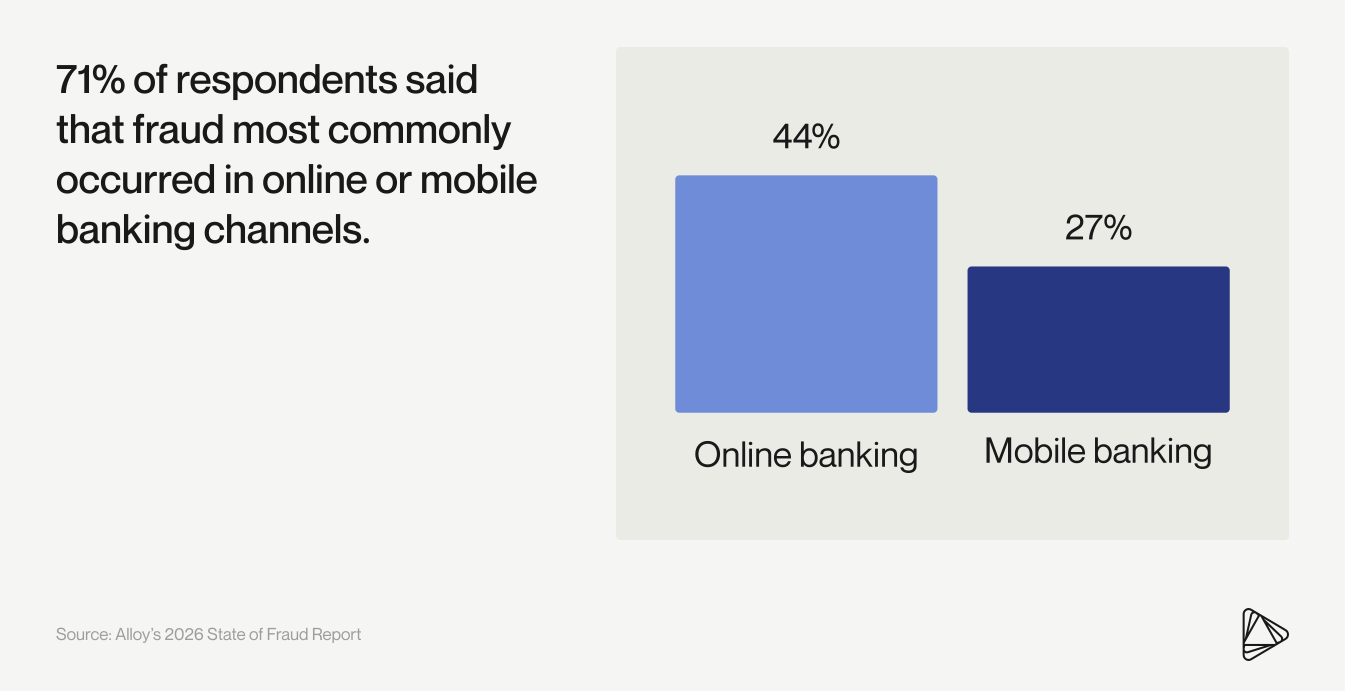
But here's what concerns me. As these digital fraud prevention measures take effect, we may see shifts in fraud trends. Whenever financial institutions bolster their defenses to combat attacks in one channel, fraud rings adapt and shift their focus to the next weakest entry point. In other words, fraud doesn't disappear; it moves. The fight never ends.
This highlights the importance of continually reassessing omnichannel fraud detection strategies. Keyword: omnichannel. You can't just protect your digital front door and assume the back door will stay secure.
4. Banks won't back down on scam prevention regardless of regulation
Despite a shifting regulatory landscape, banks aren't planning to ease up on their scam prevention policies. Even with potential changes to CFPB oversight, financial institutions recognize that protecting customers from scams is a matter of business survival.
The math is simple: Offering a $25 goodwill credit can help retain a customer who generates $300K in annual revenue. Interestingly, enterprise banks prioritize this calculation more than credit unions do. While 91% of enterprise banks rank goodwill credits as a top fraud consequence, only 84% of credit unions say the same. This gap may reflect credit unions' relationship-driven model— when they have stronger personal ties with customers, they may not need to lean as heavily on financial payouts to maintain loyalty after a fraud incident.
Reputational risk matters. Customer retention matters. And financial decision-makers know it, with 9 in 10 considering fraud prevention a key driver of customer trust. In the moment of truth — when a customer falls victim to fraud — the way a bank responds determines whether that customer stays or walks.
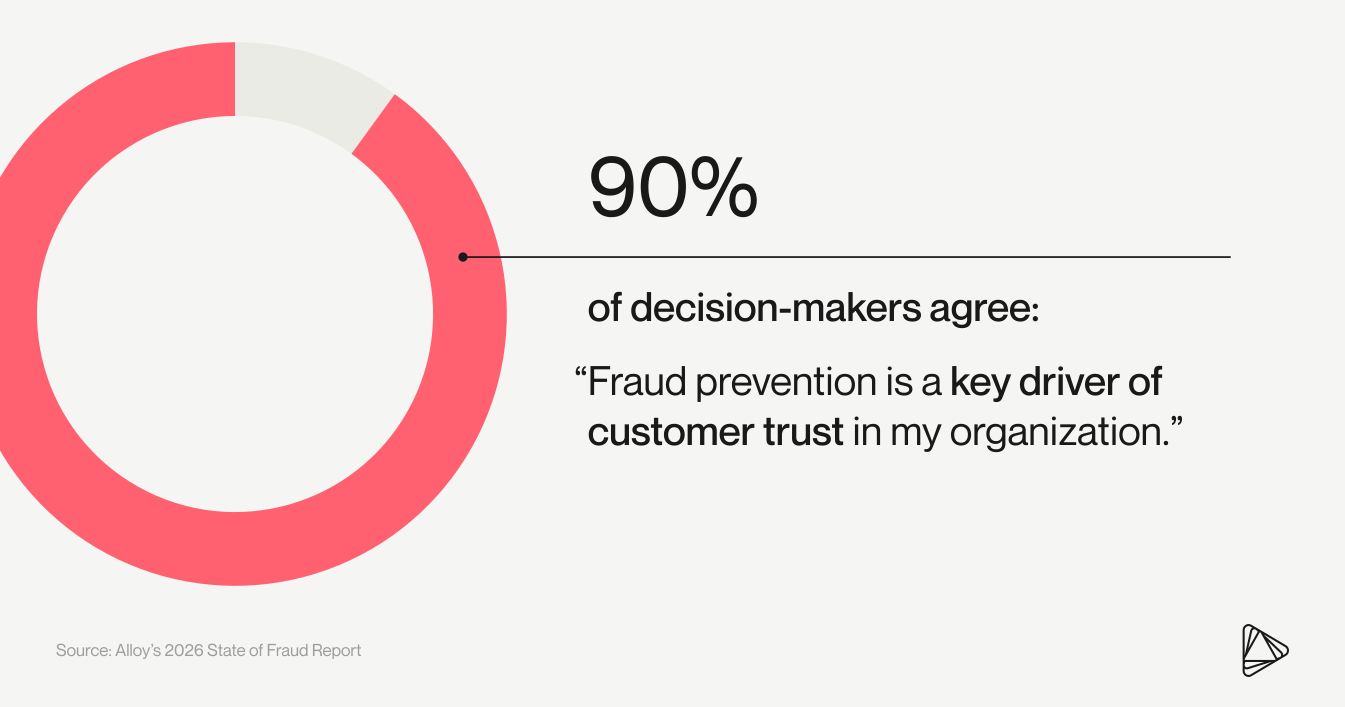
Smart financial institutions understand that robust scam prevention is a competitive advantage, not just a regulatory checkbox. The ones that provide the best protection and recovery experience will win customer loyalty in an increasingly crowded market.
5. Fraud prevention is the new growth lever
Here's the shift that's quietly transforming the industry: fraud is no longer just a defensive concern. It's a growth enabler.
When fraud risk is managed effectively, financial organizations can confidently expand into new products, new geographies, and faster payment rails. They can increase transaction limits for trusted customers. They can offer real-time payments without unacceptable exposure. Fraud concerns are often the blocker preventing institutions from launching new capabilities or entering new markets.
The data backs this up: 92% of financial decision-makers say fraud prevention efforts help grow their business. That's a remarkable shift from just a few years ago, when fraud was viewed purely as a cost center.
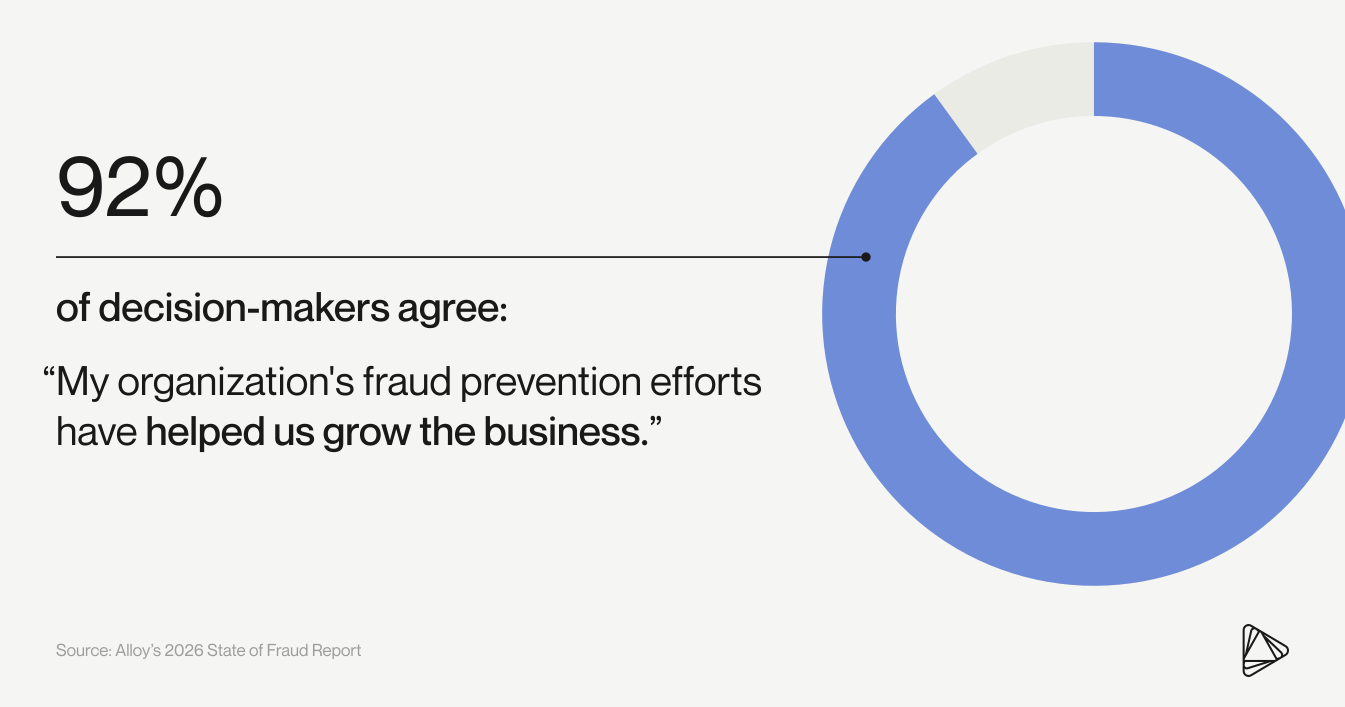
We've moved from crisis management to strategic advantage. The question is no longer, "How do we survive fraud?" It’s, "How do we use our fraud capabilities to grow?" The financial organizations that crack this code — that view fraud prevention as a way to unlock revenue opportunities rather than just stop losses — will outpace their competitors.
Looking ahead
Moving into 2026, fraud management is shifting from defense to offense. The institutions recognizing this early will pull ahead.
The past couple of years have been about survival: responding to attacks, patching vulnerabilities, and stacking defenses. But the industry has stabilized. While fraud remains relentless and sophisticated, organizations have invested in technology that enables proactive monitoring and preparation to address evolving threats.
With a solution that provides varying levels of protection, you can move with confidence, ready to tackle fraud well into the future. That creates an opportunity for innovation. You can launch new products, and enter untapped markets. You can raise transaction limits safely. Most importantly, you can grow. That’s why 91% of financial institutions and fintechs are now investing in identity solutions.
Operating in financial services means fraud will inevitably happen, but it doesn't need to be a crisis. The organizations that can respond quickly and prioritize mitigation will see huge gains in customer retention, loyalty, and growth.
Want the full story?

Sara Seguin is the Global Head of Product Marketing and Strategic Advisory at Alloy. Sara has over 16 years of experience in financial crimes within enterprise banks, including fraud, payments, risk, and identity.