Updated Feature

Persona plug-in for Alloy SDK

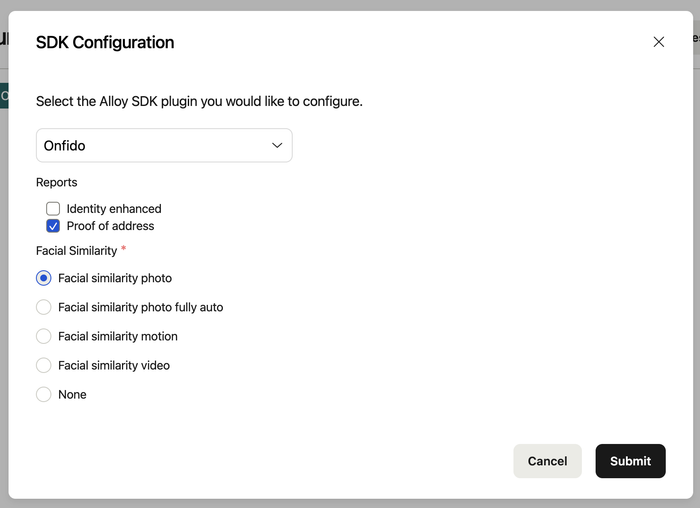
The Alloy SDK now supports the Persona documentation verification flow. Persona provides identity verification with extensive global coverage and liveness detection.

If you’re already using the Alloy SDK, simply select "Persona" as a plugin option in your workflow. No code changes are required. Dashboard setup instructions are here and API docs are here. Reach out to your CSM if you'd like to get it set up.

Global PII available in the dashboard for decisioning

Clients can now view global identity data identifiers (such as national ID # or business registry ID) in the Alloy dashboard in addition to being able to utilize these identifiers in their decisioning, making the Alloy platform more accessible for users across the world.

Starting today, clients can see and leverage global identity attributes on all Alloy dashboards and tools including (but not limited to): Entity page, Entity and Business Evaluations pages, Workflow Rule Builder, Identity Element Velocity, and Allow/Denylists.

SDK Key Dashboard

Clients can now self-service their SDK key directly in the Alloy dashboard. Previously, clients had to rely on Alloy admins to create the SDK key.


Simply select ‘SDK Key’ from the Settings’ menu to view your unique SDK key. To create a new key, click the ‘Generate new key’ button and respond to the prompt to confirm the action. Please note, generating a new key will require you to update any existing code. You will also be able to view and amend Alloy List domains on the same page.

Agents must be appropriately permissioned to view and generate keys.

If you’d like to get set up with Alloy SDK, please reach out to your CSM.

Prove Pre-fill plug-in for Alloy SDK

The Alloy SDK now supports the Prove Pre-fill flow. Prove Pre-fill pre-populates application forms with verified identity information, and displays it to the user for confirmation or further edits, reducing consumer friction and fraud.

To get started, simply select "Prove" as a plugin option in your workflow if you are already using the Alloy SDK. Dashboard setup instructions are here and API docs are here. Reach out to your CSM if you'd like to get it set up.

Vouched plug-in for Alloy SDK

The Alloy SDK now supports the Vouched document verification flow. Vouched leverages proprietary artificial intelligence to fully verify identity and onboard users in seconds.

If you’re already using the Alloy SDK, simply select "Vouched" as a plugin option in your workflow.

No code changes are required. Dashboard setup instructions are here and API docs are here. Reach out to your CSM if you'd like to get it set up.

Socure plug-in for Alloy SDK

The Alloy SDK now supports Socure's document verification flow. If you’re already using the Alloy SDK, simply select "Socure" as a plugin option in your workflow. No code changes are required. Dashboard setup instructions are here and API docs are here. Contact your CSM if you'd like to get it set up.

If you’d like to see a demo or learn more about the Alloy SDK watch our “Using the Alloy SDK to optimize customer onboarding” webinar.

Test and understand the impact of your transaction monitoring workflows

Transaction Monitoring clients can now view the percentile distribution of impacted entities to help determine the appropriate decisioning thresholds to test.

Previously, clients were able to test scenarios by changing rule thresholds and seeing the total number of impacted entities as well as viewing a list of sample entities. By understanding the percentile spread across their customer base, clients can now better optimize their rules by making more informed decisions about setting and adjusting thresholds.

To try this feature, click on the “Show Thresholds” button for the appropriate aggregation to see the percentiles. Once the aggregation is finalized, click the "Test" button on the bottom of the window to see a sample of the impacted Entities with the updated logic (the full list can also be downloaded).

More flexible aggregations now available for transaction monitoring rules

Transaction Monitoring clients can now build rules on transaction history and PII changes using more granular time range options including minutes and hours.

Furthermore, clients can also run aggregations at the transacting account level for entities with multiple accounts. Previously, aggregations could only be run on the entity as a whole. This change also extends to aggregations for counterparties; this means clients can create rules aggregating counterparty activity relating to a specific account.

These changes enable clients to configure more custom rules in order to better detect suspicious activity and reduce potential false positives for teams to review.

Back