
Alloy empowers embedded finance providers — such as sponsor banks and BaaS providers — to enforce compliance and risk controls at scale across their partner portfolios on a fully auditable platform, while enabling fintechs to build on those requirements to create better customer experiences.






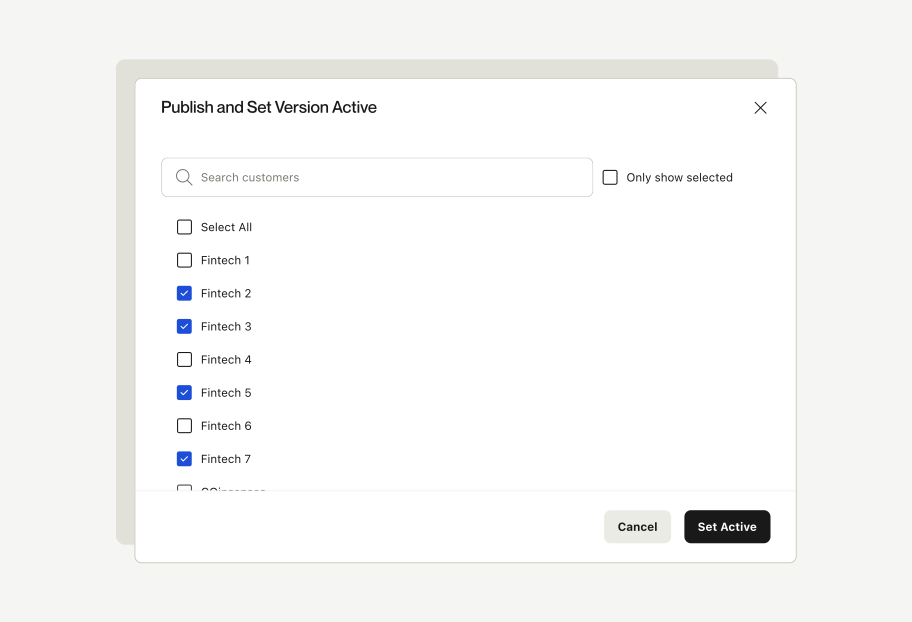
Build and enforce risk policies at scale with cloneable rulesets – no coding required. Eliminate potential blind spots with a single dashboard that provides a holistic view of risk across your entire partner portfolio. Aggregated analytics give you deeper insights into partner performance and enable you to efficiently meet audit and reporting requirements.
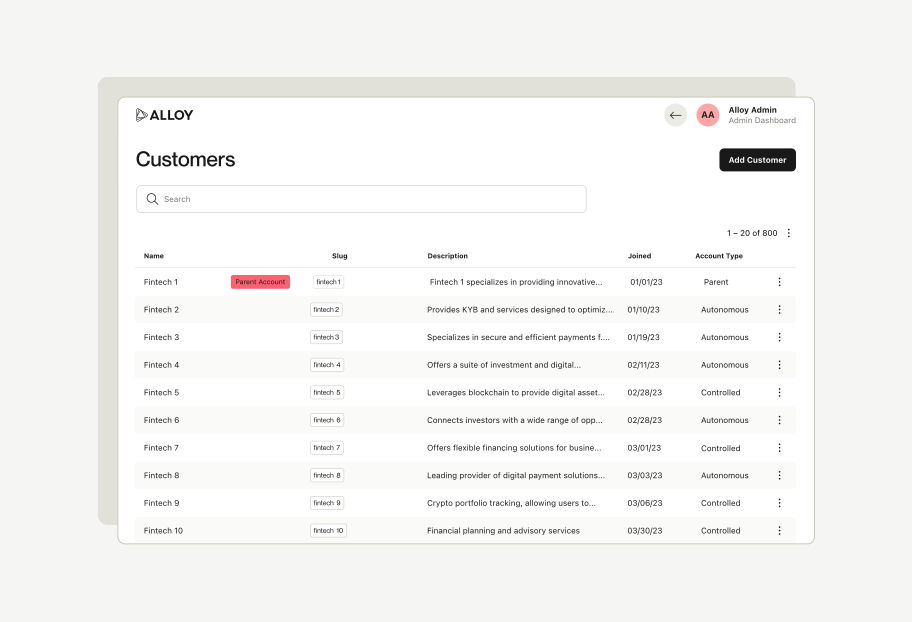
Orchestrate custom risk policies for all of your fintech partners with access to the broadest network of partner solutions in-market. With over 200 data solutions (and counting), our partner ecosystem provides unlimited optionality, allowing you to future-proof your programs for changing regulations, evolving threats, and scaling growth.
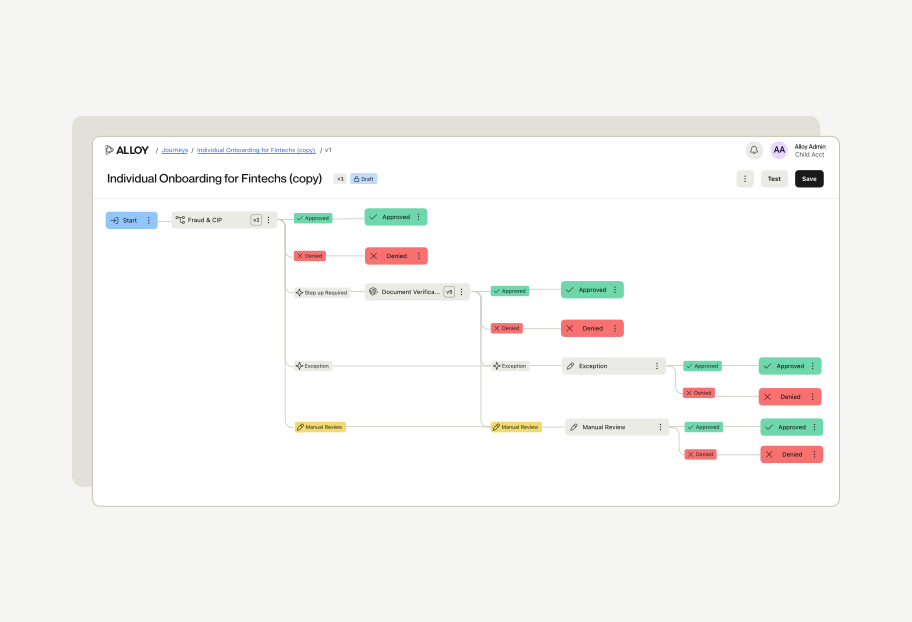
Do away with ‘one-size-fits-all’ compliance and tailor controls based on a partner’s product type and maturity. Empower your partners by giving them visibility into their policies and performance so they can continue delivering a differentiated customer experience.
Learn how Alloy can give you visibility into your fintech partners’ policies and end customer activity.
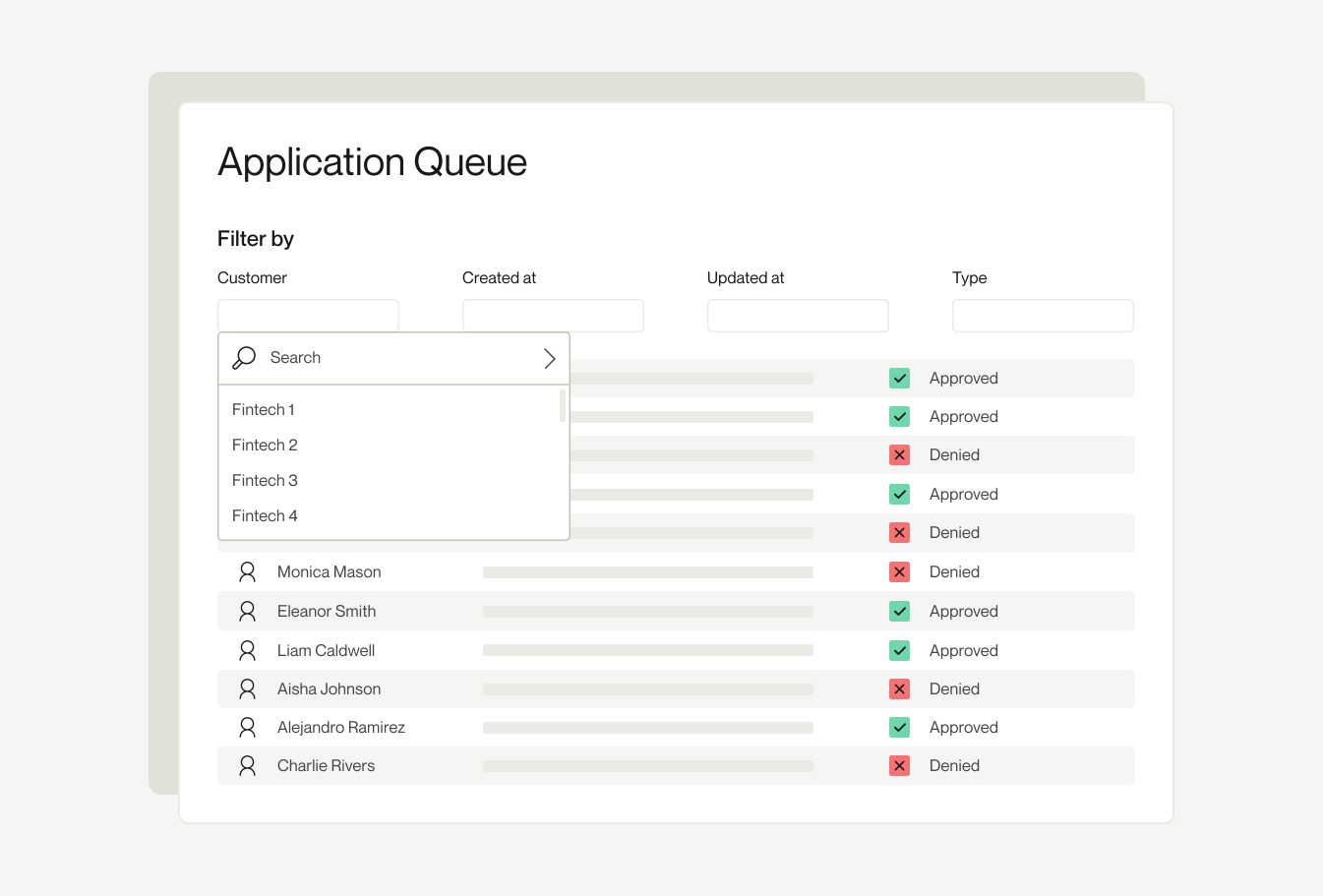

“Having the ability to modify the onboarding process for BaaS clients through the parent-child account structure is a game changer. My compliance team outlines the specific KYC requirements that we hold our clients to. Whenever they make changes, I can roll out version updates for every partner in our portfolio at once. This ensures compliance across the board, while allowing our clients to manage their own risk tolerance."
Sponsor banks and fintechs have different priorities when onboarding new customers — but those priorities don’t have to compete. Alloy's Chief Product Officer, Parilee Edison Wang, does a deep dive into the Alloy for Embedded Finance product and shares why it will be a game-changer for all players in the embedded finance ecosystem.

We empower embedded finance providers to operate fully compliant programs at scale while mitigating fraud.
Alloy enables sponsor banks, BaaS platforms, and fintechs to manage compliance at scale through a unified identity and risk framework. Our platform centralizes KYC, KYB, AML, and fraud prevention policies across all fintech partners, ensuring visibility and oversight from a single dashboard. That means sponsor banks and embedded finance providers can clone policies, apply risk-based rules, and monitor partner activity in real time — creating consistent compliance without adding operational drag.
Yes. Alloy’s hierarchical “parent-child” structure gives sponsor banks oversight while allowing fintech partners autonomy to manage their own workflows. Through a single interface, institutions can view onboarding, sanctions screening, and suspicious activity monitoring across every partner relationship. This structure ensures transparency and oversight while maintaining speed for end users.
Alloy acts as the compliance and risk infrastructure behind embedded payments and lending. Our platform verifies user and business identities, monitors transactions for suspicious behavior, and applies AML and fraud controls automatically. This allows fintechs to launch embedded financial products safely, while sponsor banks retain transparency and oversight over compliance execution.
Alloy’s API-first architecture and low-code SDKs make it easy to embed identity verification, fraud prevention, and compliance tools into existing BaaS stacks. Our platform seamlessly integrates with partner systems such as payment processors, card issuers, and ledgering platforms — extending risk and compliance coverage without requiring custom builds or duplicate workflows.
Yes. Alloy detects and prevents fraud across embedded finance ecosystems by analyzing identity, behavioral, and transaction data in real time. Our adaptive policies flag anomalies like synthetic IDs, account takeovers, and mule activity while adjusting verification intensity based on partner risk profiles or product types. This enables fintechs and banks to stop evolving threats without creating friction for legitimate users.