How to lead the AI transformation in financial services instead of chasing it
Jun 1, 2026
Fraud is becoming more sophisticated, and the pressure to operationalize AI has never been higher. Alloy solves both challenges.

When we started Alloy, financial institutions and fintechs were stitching together identity data from too many places, with no easy way to make sense of it. So we built an orchestration platform that connected every data source into a single workflow.
Since then, fraud has only gotten more sophisticated and more prevalent. Generative AI has proliferated consumer scams, and agentic AI threatens to “turbocharge” fraud even further.
At the same time, financial organizations (like the rest of the world) are trying to figure out how to use AI to transform their operations and unlock a new horizon of growth potential.
It’s a daunting and exciting moment to be in financial services. It also happens to be what we at Alloy have been building toward.
Almost every risk procedure or identity decision can be automated with Alloy
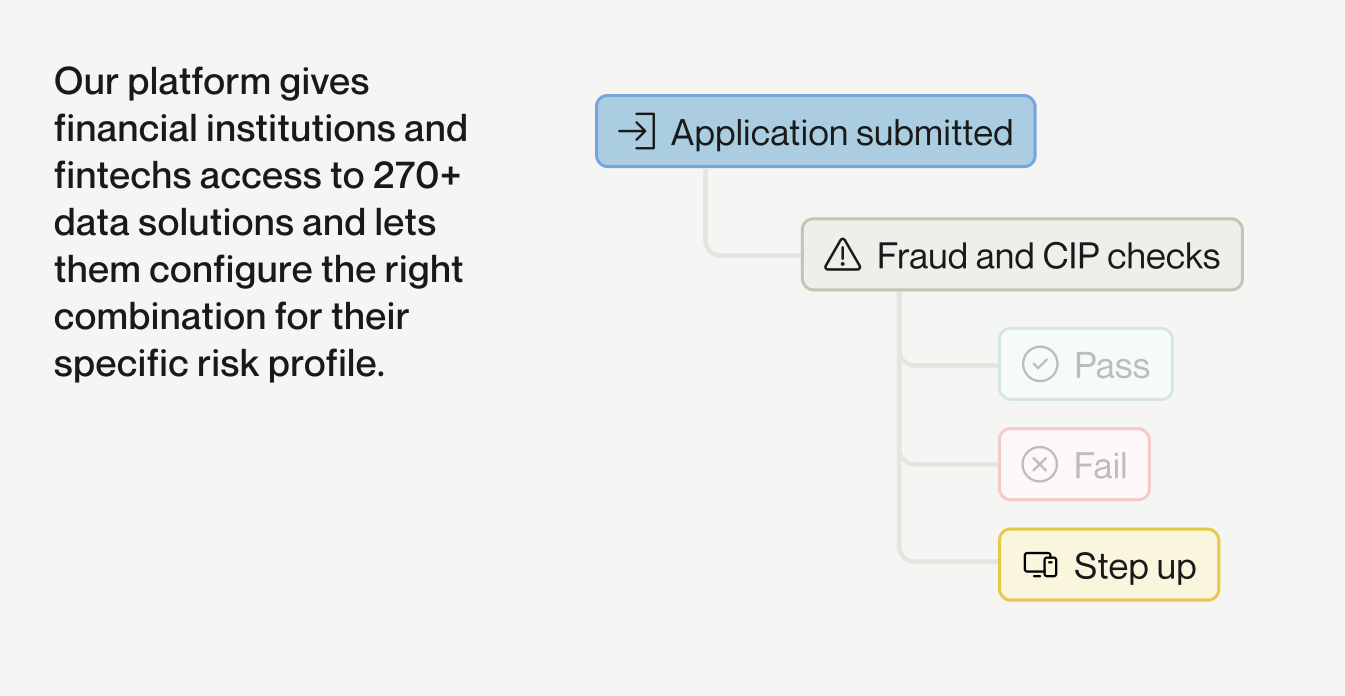
Ever since we founded Alloy in 2015, we’ve been working toward a better approach to risk management — one built on an open data ecosystem. Instead of supplying a closed set of data products from a few vendors, our platform gives financial institutions and fintechs access to 270+ data solutions, and lets them configure the right combination for their specific risk profile.
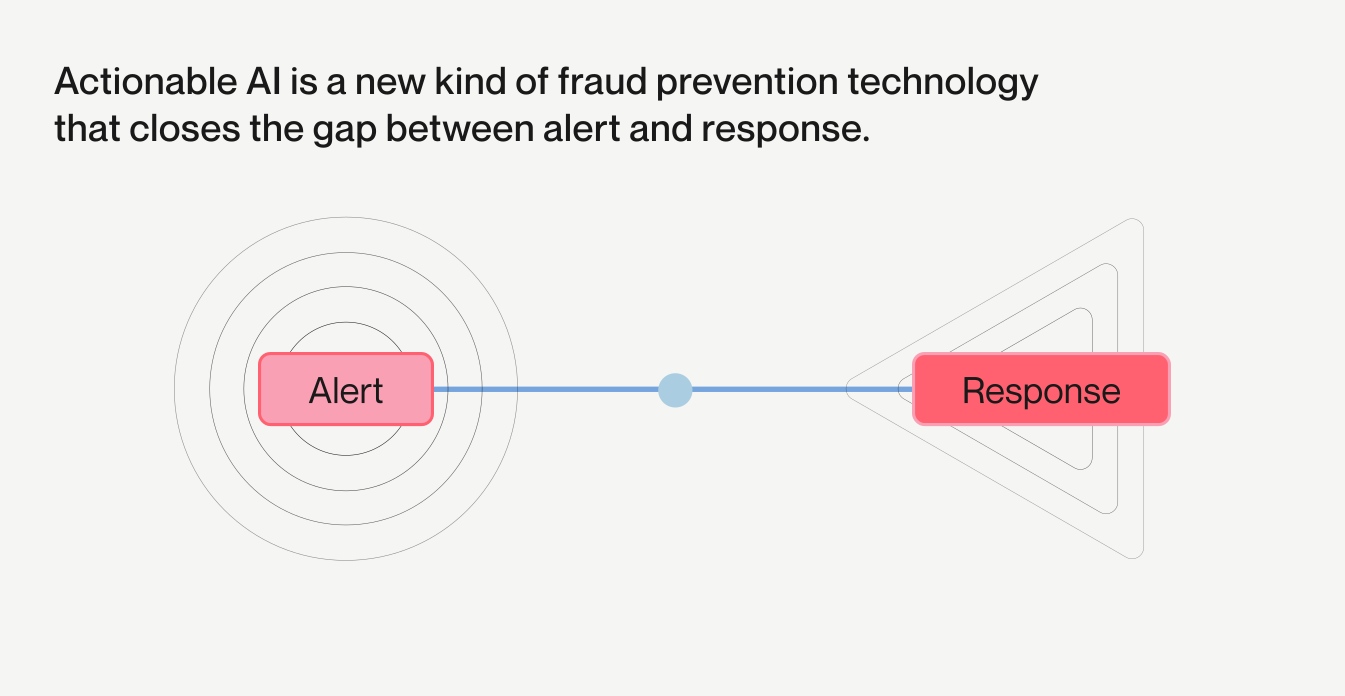
Our Actionable AI suite puts that data to work across the customer lifecycle, automating the decisions and procedures that have always defined and throttled risk and compliance operations. Three features make this possible:
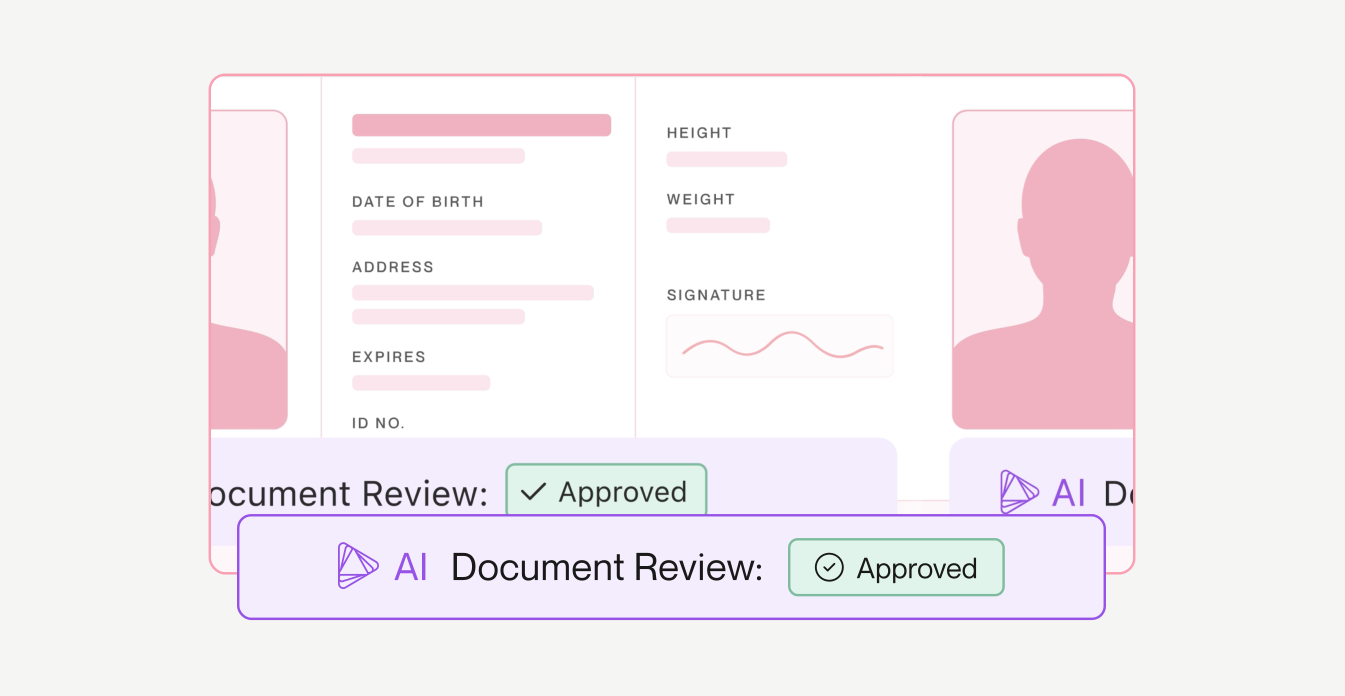
1. AI Assistant
The AI Assistant brings agentic AI into compliance and fraud operations, automating all the operationally heavy tasks in risk/compliance workflows. It can generate case summaries and execute procedures like business website verification, PEP and adverse media screening, and document review on behalf of risk teams. Standard operating practices (SOPs) that once occupied much of an investigator's time and required manual review can now be translated into auditable agents that automatically complete tasks inside existing workflows.
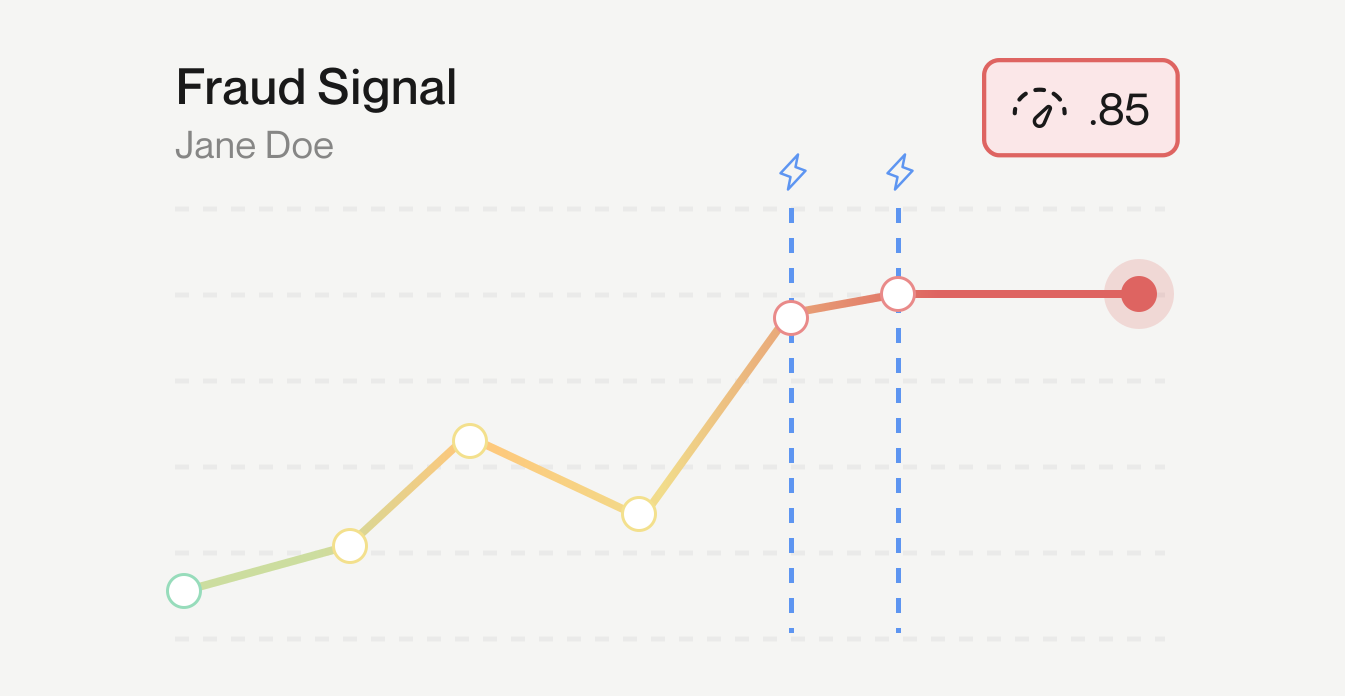
2. Fraud Signal
Fraud Signal uses machine learning to continuously evaluate customer identities using onboarding, transaction, behavioral, device, and other data. It produces a single fraud score that becomes more accurate over time, helping financial organizations distinguish good customers from bad ones with less operational complexity.
3. Fraud Attack Radar
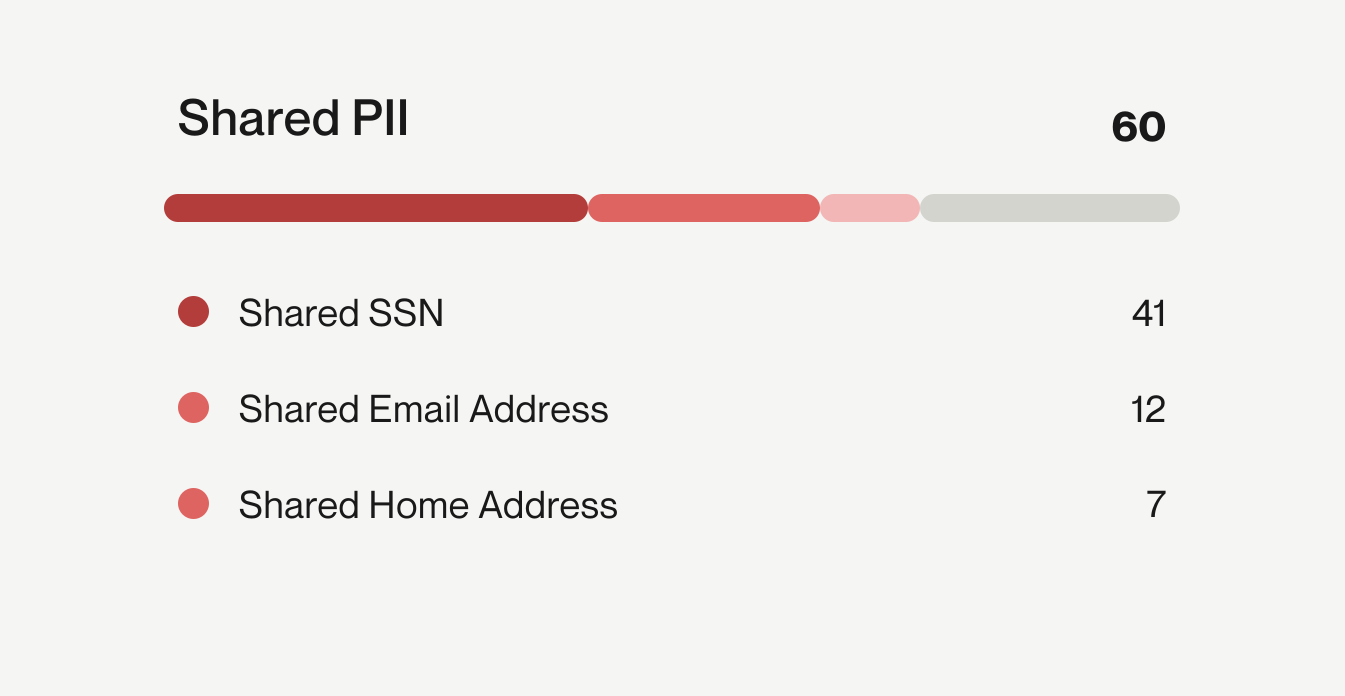
Fraud Attack Radar detects coordinated fraud activity at onboarding by monitoring for portfolio-wide attack patterns. Teams can enter safe mode directly within the platform to stop fraud before it scales without affecting normal onboarding operations.
In high-stakes workflows, AI needs to see the full picture
What makes AI reliable in high-stakes risk and compliance workflows is how deeply it's embedded in the process. If you ask a general-purpose AI tool to read a business’s website and verify that it operates in the industry it claims, it may return something plausible. But it won’t know what checks have already run, what risk signals already exist, or how that answer affects the next decision.
What we’ve built is AI that operates with a complete understanding of the process it’s embedded in, because that process already lives in Alloy. It knows what has happened, what comes next, and what action it is allowed to take.
Together, these capabilities create a complete intelligence layer:
- Machine learning to improve accuracy across the customer lifecycle
- Portfolio detection to identify coordinated threats at onboarding
- Agentic AI to automate execution
That only works because all three sit inside the same orchestration system. They are informed by the same rich data, operate within the same workflows, and continuously improve the decisions Alloy helps customers make.
Why this matters now
The financial services industry is now flooded with AI point solutions. They inherit the same problem Alloy was built to solve: fragmented data producing incomplete decisions.
At the same time, every financial institution and fintech is under pressure to operationalize AI before the window closes. The decisions being made now will be hard to undo.
For organizations that already use Alloy, the infrastructure to deploy AI effectively is already in place. Machine learning identifies what deserves attention. Agentic AI decides what happens next. And because both operate inside the same orchestration engine that connects your data, workflows, and decision logic, Alloy's AI doesn't need to be trained on your process. It's already embedded in it.
We built a platform to bring identity data together in one place and help financial institutions and fintechs act on it. That's still what Alloy does. The difference is that now, the action can be taken by AI, so financial organizations can scale risk management across the entire customer lifecycle with confidence like never before.
Learn more about Alloy's AI tools
Register for our upcoming webinar, Inside Alloy's platform vision for the AI era

Tommy Nicholas is the CEO and co-founder of Alloy, a leading identity and fraud prevention platform provider. After graduating from the University of Virginia, Tommy began his career in financial services, including working as a founding member of a payment startup. It was there that he and co-founders Laura Spiekerman and Charles Hearn recognized the need for a better tool to connect banks and fintech companies to sources of KYC, AML, and other compliance data. In 2015, they co-founded Alloy, and today over 900 banks, credit unions, and fintechs turn to Alloy to optimize growth while minimizing fraud risk.